
Vision
We want to be a capable, lasting institute that helps Somali women become economically independent.
 UNHCR, the UN Refugee Agency
 COOPI, Cooperazione Internazionale
 UNICEF
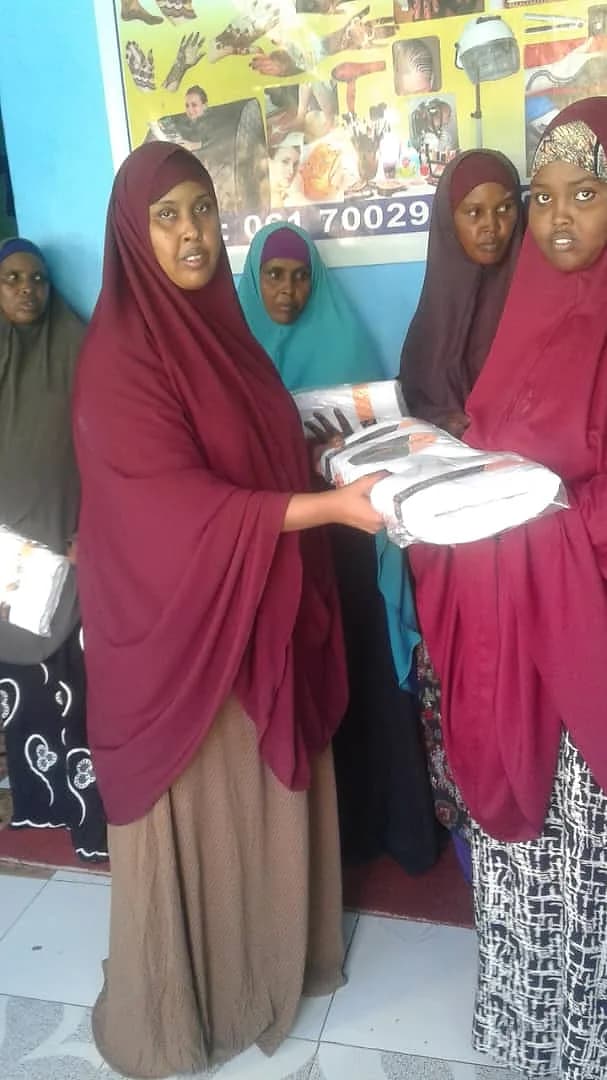
2016
A group of Somali women, worried about poverty among women in their communities, started RTVTI from the grassroots.
9 skills
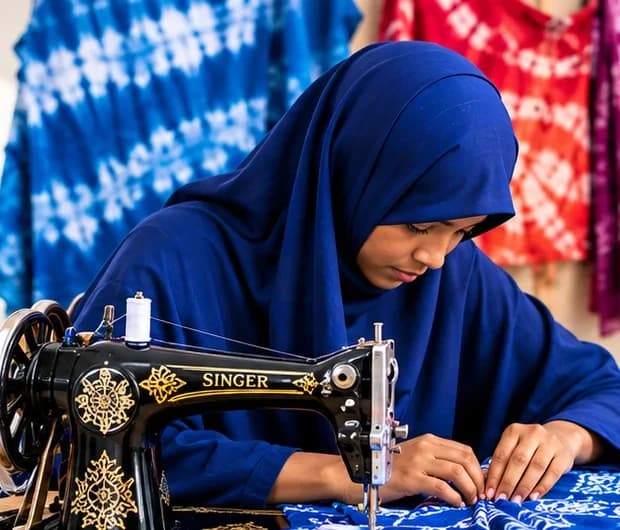
We teach nine skills, each chosen because local markets need it, so women can earn a living from what they learn.
Rights
We speak up for women's social and economic rights, and run awareness work on reproductive health and on the harm FGM does.
Next
We plan to open branches and associations across the country, and to build a regional and international network for Somali women.
Her story
Since 2013, Sagal Abdirizak has worked to open Somalia's maritime sector to women, in policy, in training and in the communities along the coast.
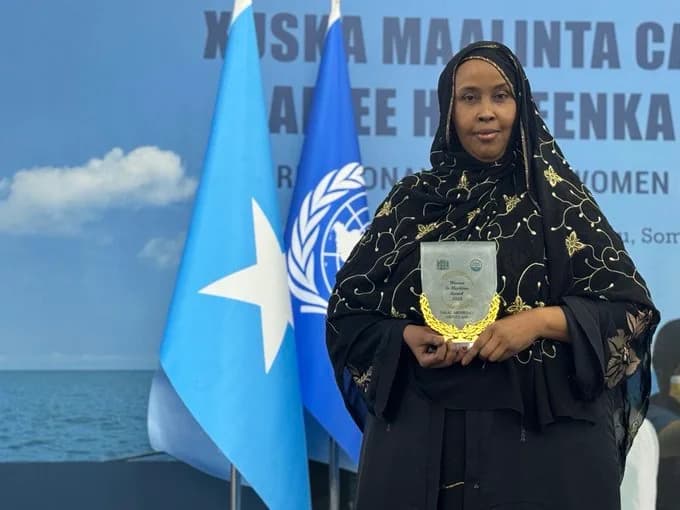
“There was a girl who once wrote me a letter. She lived in a coastal village and dreamed of working at the port. She watched ships come and go and imagined herself there. However, her family said no. Her community said no.”
Eventually, the girl gave up on her dream.
“I never even met her, but I remember every word. That is who I fight for. So, no girl has to bury her dream to please someone else's fear.”
2013
Sagal starts advancing gender equality in maritime policy, training and community engagement.
2019
She helps lead the development of Somalia's Women in Maritime Sector (WiMS) National Action Plan, the first of its kind.
2023
On 15 March 2023 the plan is launched: a national commitment to women as technical experts, managers and decision-makers.
2025
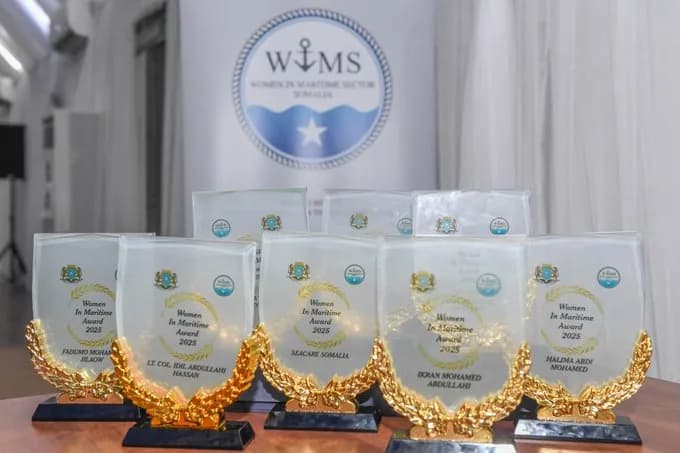
On 18 May 2025 she is honoured for her contributions to gender inclusion in the maritime sector.
Sagal, a certified teacher, trained women displaced by conflict, drought and climate shocks. Alongside the practical skills, she taught how to stay safe in crowded places, how to resist early or forced marriage, and how to plan for a future not shaped by exploitation.
The same skills RTVTI teaches today.
“We equipped them with vocational skills not just to survive, but to live with dignity.”
“Some of my students have now opened their own beauty salons. They are independent. They are proud. Moreover, I am proud of them.”
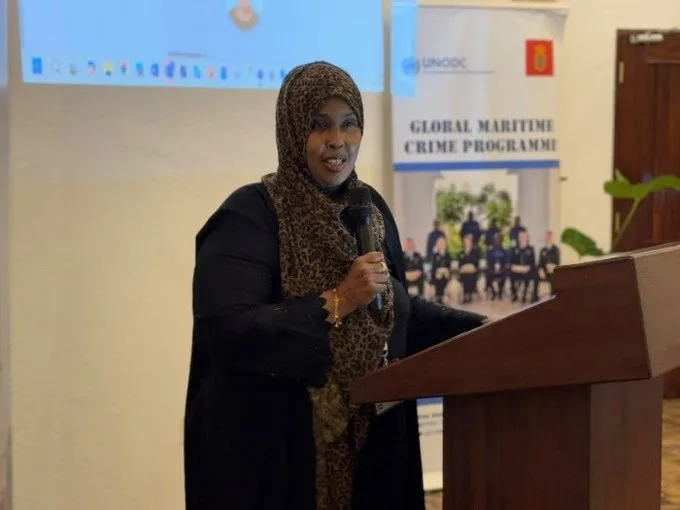
“I do not want to be the only woman in the room. I want to hold the door open so others can walk through without fear.”
Story by the UNODC Border Management Branch
We work close to local communities all over the country, in towns and in rural areas.
RTVTI says it has a good relationship with local government, including the authorities in Mogadishu and its districts.
We want to be a capable, lasting institute that helps Somali women become economically independent.
We train women in skills that local markets need, so they have better social and economic choices in their lives.
Bring communities together at the grassroots to support Somali women.
Encourage self-reliance and peaceful coexistence, and help marginalized communities find their place again.
Open, equip and run branches and associations across the country.
Hold a yearly summit or conference on how skills training improves Somali women's economic and social lives.
Work with communities to start open conversations about supporting marginalized groups, women among them.
Serve people affected by the civil conflict, especially women who have been neglected or pushed to the margins.
Offer practical alternatives that change the economic, social and political conditions marginalized women live in, in towns and in the countryside.
Promote and support the social and economic empowerment of Somali women.
Organize events that make the case for women's social, economic and political rights.
Organize, prepare for and take part in consultative forums on skills training.
Build a regional and international network that works for the economic empowerment of Somali women.
We work with women affected by the civil conflict, and with women who have been neglected or marginalized, in towns and in rural areas.
Training is the main work, but not the only work. RTVTI speaks up for women's social and economic rights, and from time to time runs awareness sessions on reproductive health, including child spacing, and on the harm Female Genital Mutilation (FGM) does to women's health.
Open, equip and run branches and associations across the country.
Build a regional and international network that works for the economic empowerment of Somali women.
Ruweyda Technical Vocational Training Institute (RTVTI) was founded in 2016 by a group of Somali women who were worried about how many women in their communities lived in poverty. It trains women in skills that local markets need, so they can earn a living and build better economic lives.
In 2016.
A group of Somali women from the grassroots.
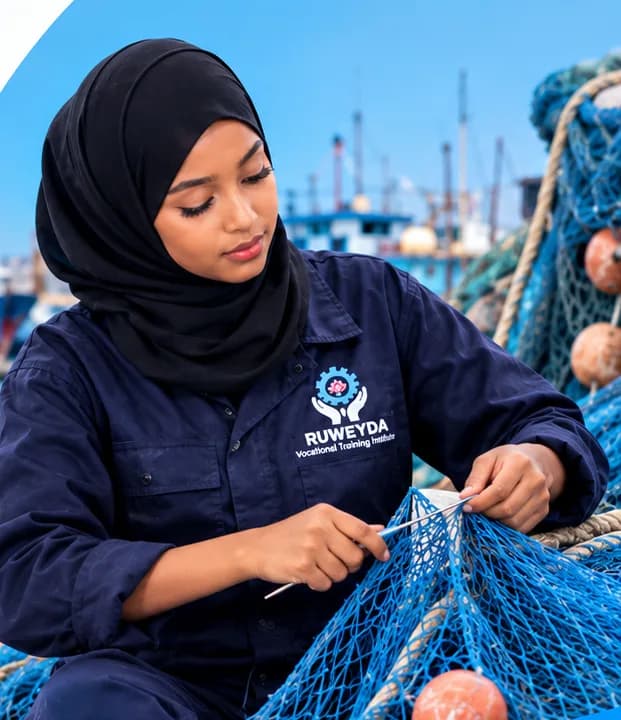
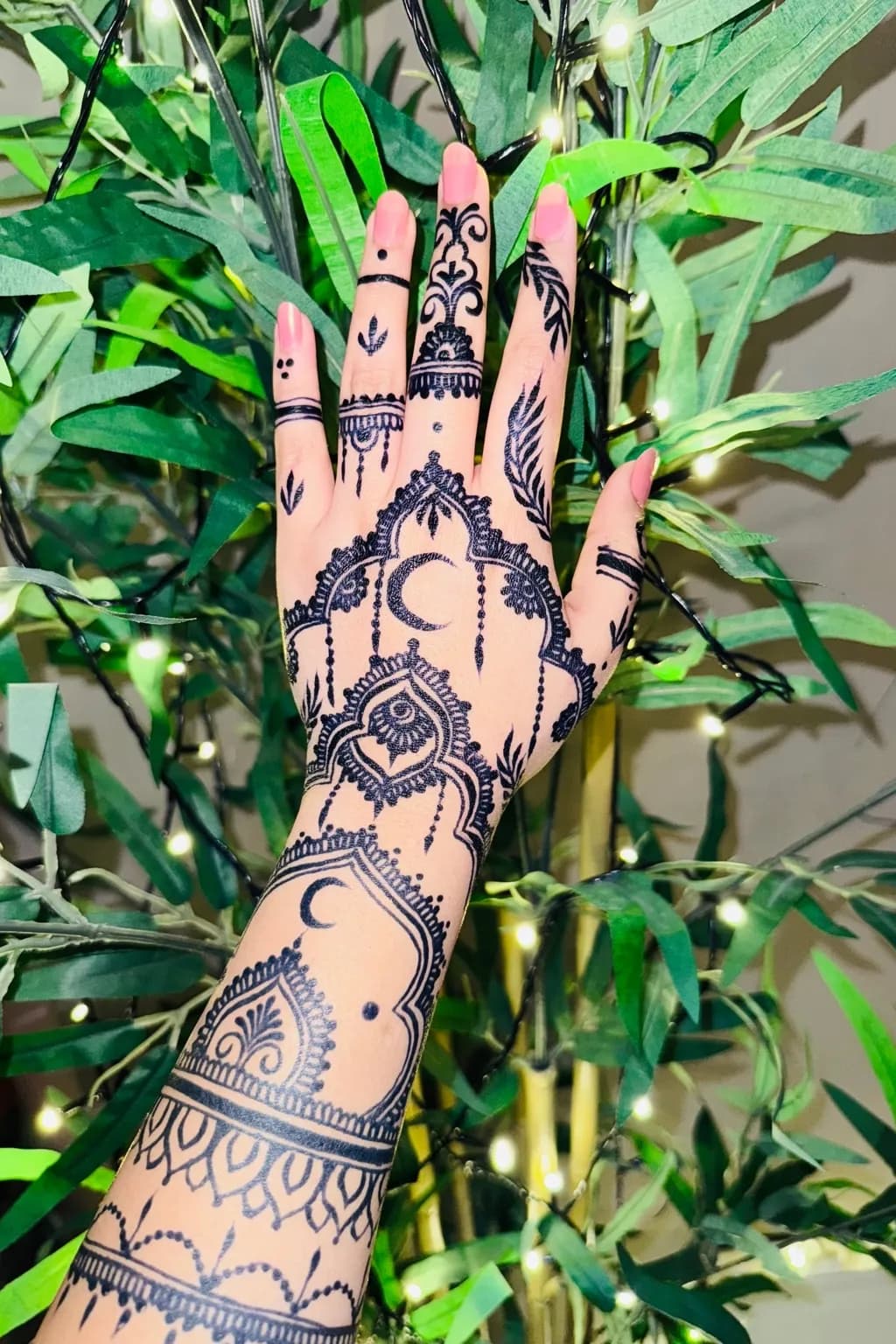
Nine skills: tie and dye, beauty salon (henna and make-up), tailoring, plumbing, fish nets, packaging, decorations, charcoal making, and homemade shampoo and soap.
Mostly Somali women, including women affected by the conflict and women from marginalized groups.